Men's Hairstyles for Fine Hair: Expert Tips for Volume & Style
May 23,2019
Let me tell you something powerful – your hair type isn't a limitation, it's an opportunity. When I work with men who have fine hair, I see the same pattern repeatedly: they focus on what they lack instead of leveraging what they have. Fine hair presents unique advantages – it's often more responsive to styling, creates clean lines, and can change dramatically with the right approach.
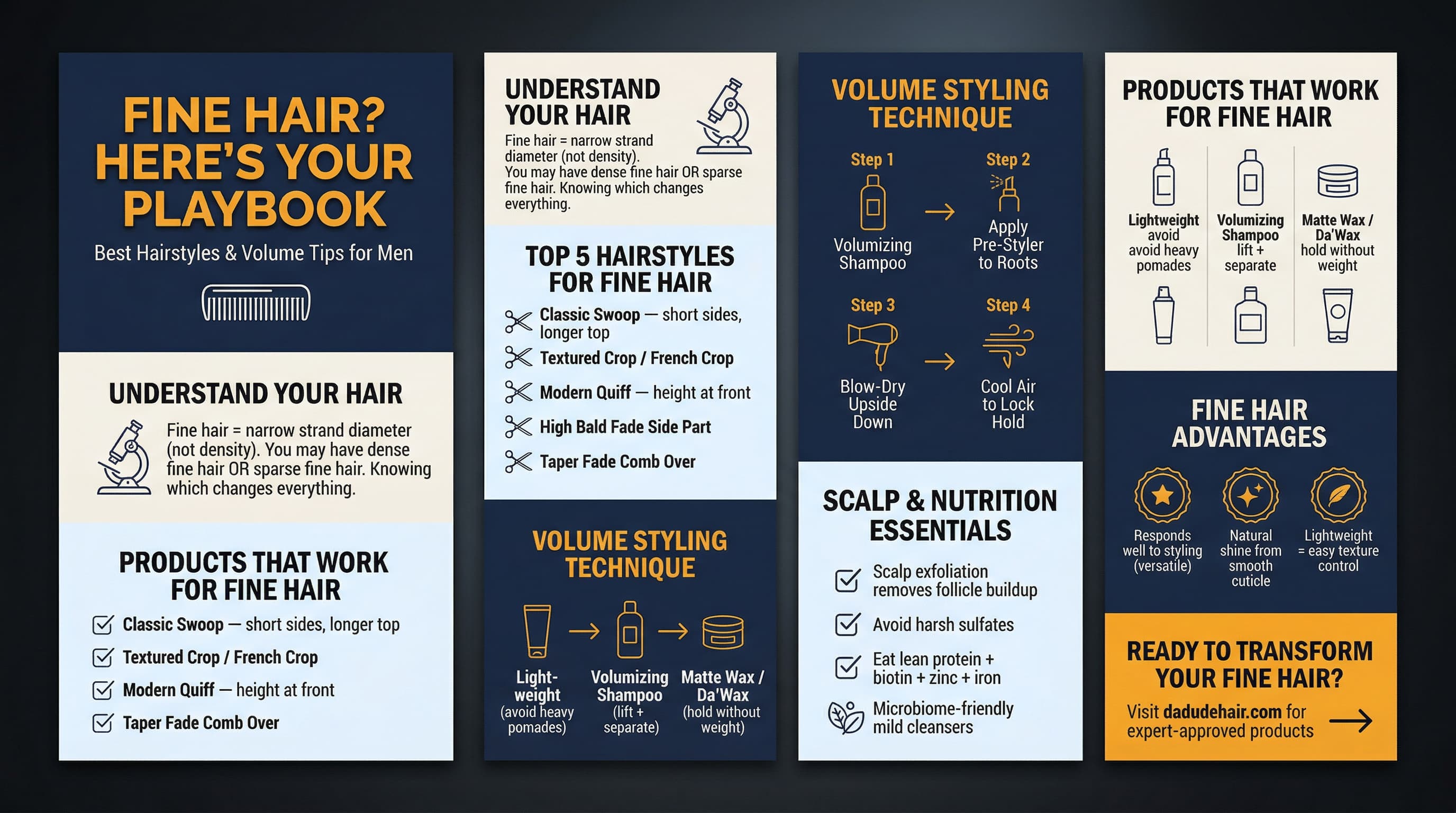
To make your hair work for you, you must understand it. The diameter of each individual hair strand—rather than the density of hair on your scalp—is referred to as fine hair. While some men have sparse, fine hair, others have dense, fine hair. Identifying which category you fall into is your first step toward transformation.

Your beautiful hair isn't something you need to fight; it's something you must learn to manage. The following techniques, styling methods, and products have helped thousands of guys transform their lives with their hair. They aren't about a good appearance; they're about feeling good about yourself and communicating the confidence one gets from understanding you're out there showing people your best side.
Best Hairstyles That Maximize Fine Hair Volume
The right haircut is more than just a style – it's a strategic decision that can completely change how your fine hair behaves and appears. Here are some excellent styles to consider for fine hair.
The Volume-Maximizing Classic Swoop
The Classic Swoop creates immediate impact through strategic length distribution. You can create a canvas for volume by keeping the sides shorter and the top longer. The styling is where the magic happens. To create a foundation of volume that lasts all day, apply dry shampoo to the roots and blow dry your hair.
This style offers great adaptability. You can go for a polished, business-ready look or tousle it for weekend casual vibes. Either way, you're working with your fine hair's natural properties rather than against them. A light hairspray application technique will lock in the volume and texture without weighing your hair down.

Textured Crops, Quiffs, and Modern Styles for Fine Hair
If you're ready to embrace a more contemporary look, the textured crop is your ally. This style works by creating visual thickness through hair texture rather than length. The French crop variation, with its forward-styled fringe and textured top, gives the appearance of fuller hair through strategic cutting techniques that create movement and dimension.
The modern quiff takes this concept further by adding height at the front. The key difference between a successful quiff for fine hair versus thicker hair lies in the preparation. Volumizing products applied to damp roots before styling creates the foundation for long-lasting height in fine hair.
Textured hair appears thicker because of the highlights and shadows produced by the light. This optical illusion works well for fine hair.
Strategic Fades and Structural Styles
The Side Part with High Bald Fade represents precision styling at its finest. By creating a stark contrast between the clean-faded sides and the longer top, you draw the eye upward, creating the illusion of thickness where you need it most. This style uses structure and contrast to create visual impact. If you're also dealing with a receding hairline, this cut can help maximize your look.
For people with fine hair that is naturally curly or wavy, the Taper Fade Comb Over is a solution that preserves control while highlighting natural texture. The slow fade from length on top, to skin at the nape, produces a smooth transition that lengthens the face and highlights the volume on top. Styling with matte pomade enhances definition without the weight of heavier products.
These structural styles direct attention exactly where you want it – toward the volume and away from areas where fineness might be more apparent.

Fine Hair Styling Science: Techniques That Work
You can achieve better styling results if you understand how fine hair functions. Here are some tips for efficient styling and maintenance that will enhance your outcomes.
The Volumizing Foundation: Biology Meets Technology
Due to its basic structure, fine hair reacts differently to various products and techniques. Compared to thicker hair types, each strand has fewer cuticle layers, which makes it more susceptible to damage but also more receptive to lightweight products.
Proper preparation is the first step in the process. Using volumizing shampoos does more than just clean your hair; it also removes buildup that causes fine hairs to become heavy and deposits light-textured polymers that cause individual hairs to separate. This division is essential because it produces the microscopic space that corresponds to the volume that is visible.
Blow-drying technique matters greatly. The roots are being lifted away from the scalp by gravity when you blow-dry upside down. This creates a memory in the hair shaft that persists even after you flip back up. Alternate between cool and warm settings for optimal effects; the cool air solidifies the hydrogen bonds in each strand, setting the hair in place while the warm air shapes it.

Nutrition and Scalp Care for Healthier Fine Hair
Health affects hair quality, especially with fine hair. Nutrient deficiencies appear rapidly in thinning hair, particularly deficiency in protein, biotin, zinc, and iron. Include lean proteins, nuts, seeds, and leafy greens to provide your body with the building blocks necessary to create stronger hair.
Hair fullness is directly impacted by the environment on the scalp. Over time, sebum accumulation around hair follicles can cause the follicle to shrink, producing increasingly finer hair. Routine scalp exfoliation eliminates this accumulation, enabling follicles to develop to their fullest diameter. A healthy scalp supports optimal hair growth.
Avoid harsh sulfates which strip the hair's natural oils and trigger overproduction of sebum. Choose mild cleansers that preserve the equilibrium of your scalp's microbiome instead. For healthy follicles and the best possible hair growth, this microscopic ecosystem is essential. The American Academy of Dermatology recommends using products suited to your hair type.
Advanced Styling Strategies for Fine Hair
Advanced techniques and new developments can help with fine hair management.
Timeless Techniques with Modern Applications
Men across time created solutions for fine hair. The ancient Egyptians used almond oil and beeswax preparations to create the appearance of thicker hair – a principle that modern science has validated. Today's lightweight products incorporate similar natural ingredients with advanced polymers for enhanced performance.
Roman men used heated clay rods to texturize fine hair – the ancestors of today's styling tools. They knew that creating deliberate waves and texture added the appearance of thickness. This principle remains useful, though our tools have dramatically improved.
Many traditional hair practices continue to work well today. Creating separation between strands, adding texture through strategic cutting, and using products that build rather than weigh down – these approaches have remained useful despite centuries of changing fashions. Products like Da'Wax provide all-day hold with a matte finish that's perfect for fine hair.

Comment