
Blow Dry vs Air Dry: Women's Guide to Volume, Shine & Healthy Hair
May 02,2026
Your morning hair routine isn't just about getting ready — it's your daily ritual of self-care, confidence, and intention.
Let's be honest: most of us have stood in front of the bathroom mirror, hair dripping wet, and made a choice we later regretted — the towel-scrunch-and-hope-for-the-best approach. You wrap your hair up, let it air dry, and cross your fingers that it lands somewhere between "effortlessly chic" and "I meant to do this." Sometimes it works. Most of the time? You're left with flat roots, undefined ends, and hair that seems to have its own agenda entirely.
Here's the thing nobody talks about enough: how you dry your hair is just as important as how you wash, condition, or style it. Your drying method sets the foundation for everything that follows — the volume, the texture, the frizz (or lack thereof), and how long your style actually lasts through the day.
So let's talk about it properly. Blow drying versus air drying — what's actually better for your hair, your lifestyle, and your look? And how do you blow dry in a way that enhances rather than damages your strands? Whether you have fine, flat hair craving lift, thick waves begging for definition, or curly hair that needs taming without losing its personality, this guide is for you.
Why Air Drying Is Quietly Damaging Your Hair
We've all heard the narrative: air drying is natural, gentle, and better for your hair. And while there's a kernel of truth in there, the full picture is a bit more nuanced — and more interesting.
When your hair stays wet for a prolonged period, the hair shaft actually swells with water. This process, called hygral fatigue, can weaken the hair's structure over time, leading to frizz, breakage, and a lack of elasticity. So that hour (or three) your hair spends slowly drying on its own? It's not as damage-free as it sounds.
Air drying also has a practical downside that most of us know intimately: it produces flat, lifeless results. Without any directional heat or styling, gravity wins. Your roots lie down, your ends dry however they please, and the beautiful shape you had in mind simply doesn't materialize. For more on protecting your hair through every season, the seasonal hair care guide covers how to adapt your routine year-round.
This isn't to say air drying is always wrong — on lazy weekends, for low-manipulation styles, or when your hair genuinely thrives with it, it absolutely has a place. But if volume, texture, and a polished finish are what you're after, blow drying done correctly is your best friend.

The Real Benefits of Blow Drying Women's Hair
Think of your hair dryer not as a damage device, but as a precision styling tool — one that, when used with the right technique and products, can genuinely transform your hair.
Here's what intentional blow drying actually does:
Builds volume from the root. Heat lifts the cuticle and, when directed upward at the roots, creates that coveted bouncy, full-bodied effect that no amount of dry shampoo can fully replicate on its own.
Enhances your natural texture. Whether your hair is naturally wavy, straight, or somewhere in between, blow drying with the right attachment helps encourage and define your texture rather than suppress it.
Seals the cuticle for shine. Finishing with a cool shot of air closes the hair cuticle, locking in moisture and giving your hair a healthy, reflective shine.
Cuts your morning time significantly. A quality blow dryer with strong airflow dries hair in a fraction of the time — and that matters a lot at 7am.
Gives you control. Unlike air drying, blow drying means you decide what shape your hair takes. That's a powerful thing.
How to Prep Your Hair Before Blow Drying
Great blow-dry results start before the heat is even on. Your pre-drying routine sets the tone for the entire style.
Step 1: Towel dry gently. Skip the aggressive rubbing — that creates friction that roughens the cuticle and causes frizz. Instead, gently squeeze and press sections of your hair with a microfibre towel or an old cotton T-shirt. This removes excess water without disturbing the cuticle.
Step 2: Apply a heat protectant spray. This is non-negotiable. Heat protectant sprays form a barrier around the hair shaft, minimising damage from your dryer's heat. Think of it as SPF for your hair.
Step 3: Add texture and body before you dry. This is where The Salt Water Spray becomes a game-changer in your routine. Spritz it through damp hair from mid-lengths to ends before blow drying. The sea salt minerals instantly boost texture and create the kind of effortless, tousled body that looks like you just stepped off a beach — without any of the drying, damaging effects of actual salt water and sun. It primes your hair beautifully for styling, giving fine hair extra grip and wavy hair gorgeous definition as it dries under the heat.

Step-by-Step Blow Dry Technique for Maximum Volume
Now for the technique itself. These are the steps that make the difference between a mediocre blow dry and a salon-worthy one.
1. Section your hair. Don't try to dry everything at once. Divide your hair into at least two or three sections — the top, the sides, and the back. Clip up the sections you're not currently working on. This gives you focused control over each area.
2. Start at the roots. Roots determine volume. Before worrying about your ends, concentrate airflow at the root area, using a round brush or your fingers to lift sections upward and away from the scalp. Direct the airflow downward along the hair shaft (from root to tip) to smooth the cuticle as you lift.
3. Tilt your head forward. A classic stylist trick — flip your head forward while drying the underneath sections. This creates lift and fullness at the crown that's hard to achieve any other way.
4. Use a round brush for shape. A round brush is your best tool for creating movement, curl, and body. Roll sections of hair around the brush as you dry, using the heat to set the shape. The larger the barrel of the brush, the more of a smooth, bouncy wave you'll create. Smaller barrels give more defined curls.
5. Keep the dryer moving. Never hold heat in one spot for too long — keep the dryer moving constantly to distribute heat evenly and prevent localised damage. The science behind why this matters is covered in detail in this guide to hair health and structure.
6. Finish with the cool shot. Once a section is styled, hit it with a burst of cool air. This is the step most people skip and shouldn't — it sets the style and seals in shine.
7. Let it fully cool before touching. Hair holds its shape when it cools in position. If you run your fingers through it while it's still warm, you'll loosen everything you just created.
Tools Worth Investing In
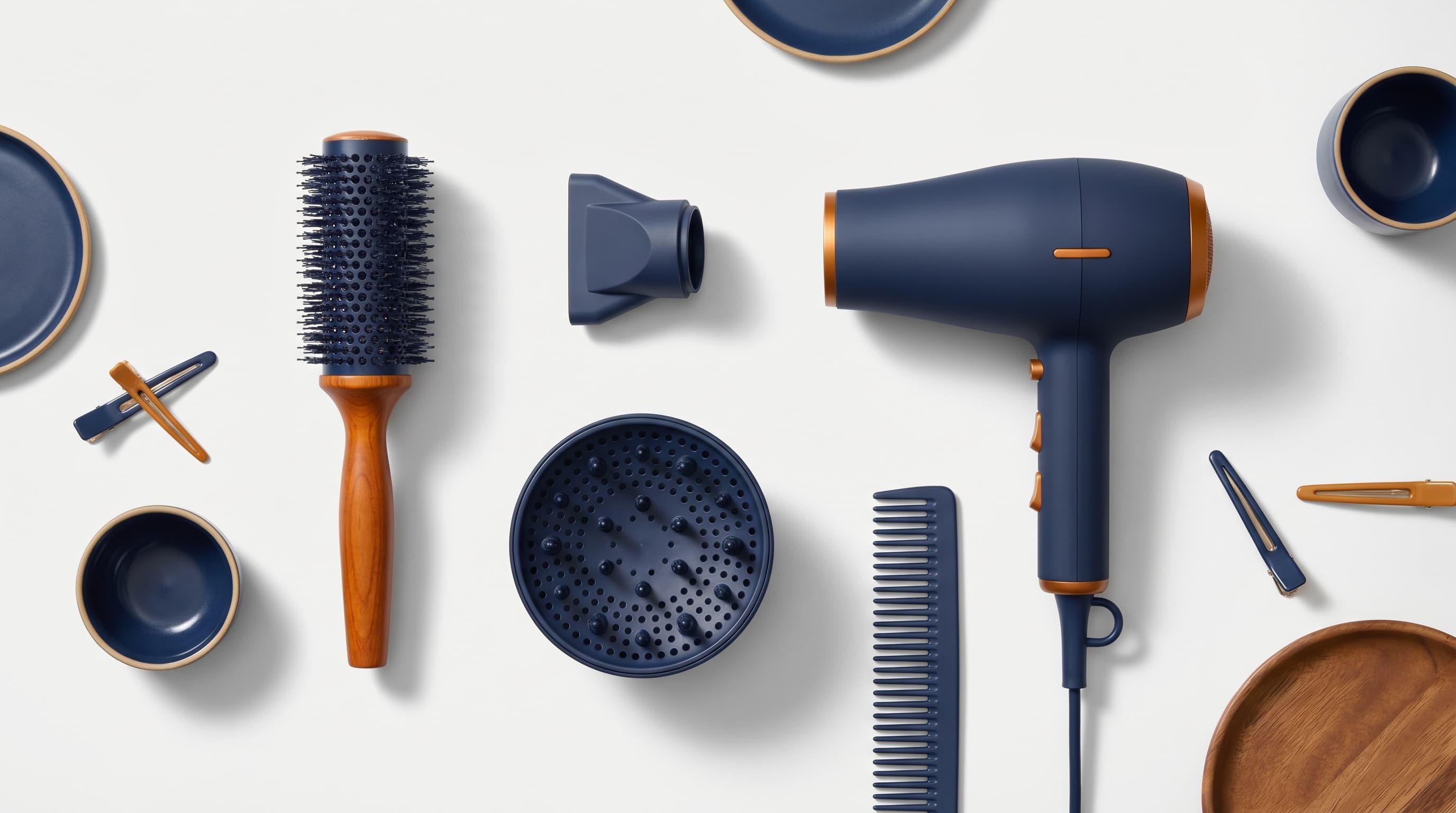
You don't need a professional kit, but a few quality tools make a noticeable difference:
- A blow dryer with multiple heat and speed settings — lower heat settings are gentler on fine or damaged hair; higher settings cut drying time on thick hair.
- A diffuser attachment — an absolute must if you have waves or curls. The diffuser distributes airflow gently, encouraging your natural texture without blowing it apart into frizz.
- A concentrator nozzle — helps you direct airflow precisely along sections when straightening or creating a smooth finish.
- A round brush in a size suited to your hair length — medium barrel for medium-length hair, large barrel for long hair.
How to Lock In Your Blow Dry Results
Once your blow dry is done, The Salt Water Spray can also be used after drying — a light mist through the mid-lengths and ends revives texture and gives that beach waves finish that's endlessly versatile. It works beautifully whether you're enhancing soft waves, adding grip to an updo, or refreshing a style mid-week.
For extra hold through a long day, finish with a light-hold flexible hairspray that keeps movement rather than freezing everything in place. If you're curious about how Swedish formulations approach hair care differently, the Swedish hair care for women guide is worth a read.
Why Your Morning Blow Dry Routine Matters
Here's what a great blow dry really represents: intentional self-care. It's five to ten minutes in the morning that you dedicate entirely to yourself — to showing up feeling polished, confident, and ready. It's not vanity. It's the quiet, consistent act of investing in how you present yourself to the world.
Your hair is one of the most immediately expressive things about you. When it looks good — when it has body, texture, and life — it changes how you carry yourself. And that carries into everything: how you walk into a meeting, how you approach your day, how you feel in your own skin.
Master your blow dry. Make it a ritual, not a chore. And let your hair do what it does best — make a statement before you've said a word.
Ready to upgrade your routine? Try The Salt Water Spray as your go-to pre-styling essential and discover the difference great prep makes from the very first use.

Comment