
Foods for Hair Growth: Men's Nutrition Guide 2026
Feb 20,2026
Let me ask you something. When you look in the mirror and notice your hair isn't what it used to be—maybe it's thinning, looking lifeless, or breaking off before it even gets a chance to grow—what do you do? Most men reach for another expensive shampoo, another styling product, another quick fix. But here's what nobody's telling you: the real transformation happens from the inside out.
Your hair is a direct reflection of what's happening inside your body. Think about that for a moment. Every single strand on your head is built from the nutrients you consume—or fail to consume. According to research from Healthline, eating a balanced diet rich in specific vitamins and minerals plays a critical role in the hair follicle growth cycle and cellular turnover. This isn't some wellness trend—this is biology.
So if you're serious about having hair that commands attention, hair that makes you feel confident, hair that actually stays on your head—then it's time to stop treating the symptom and start addressing the cause. Let's talk about the foods that transform your hair from the cellular level up.

Why Your Hair Desperately Needs Protein
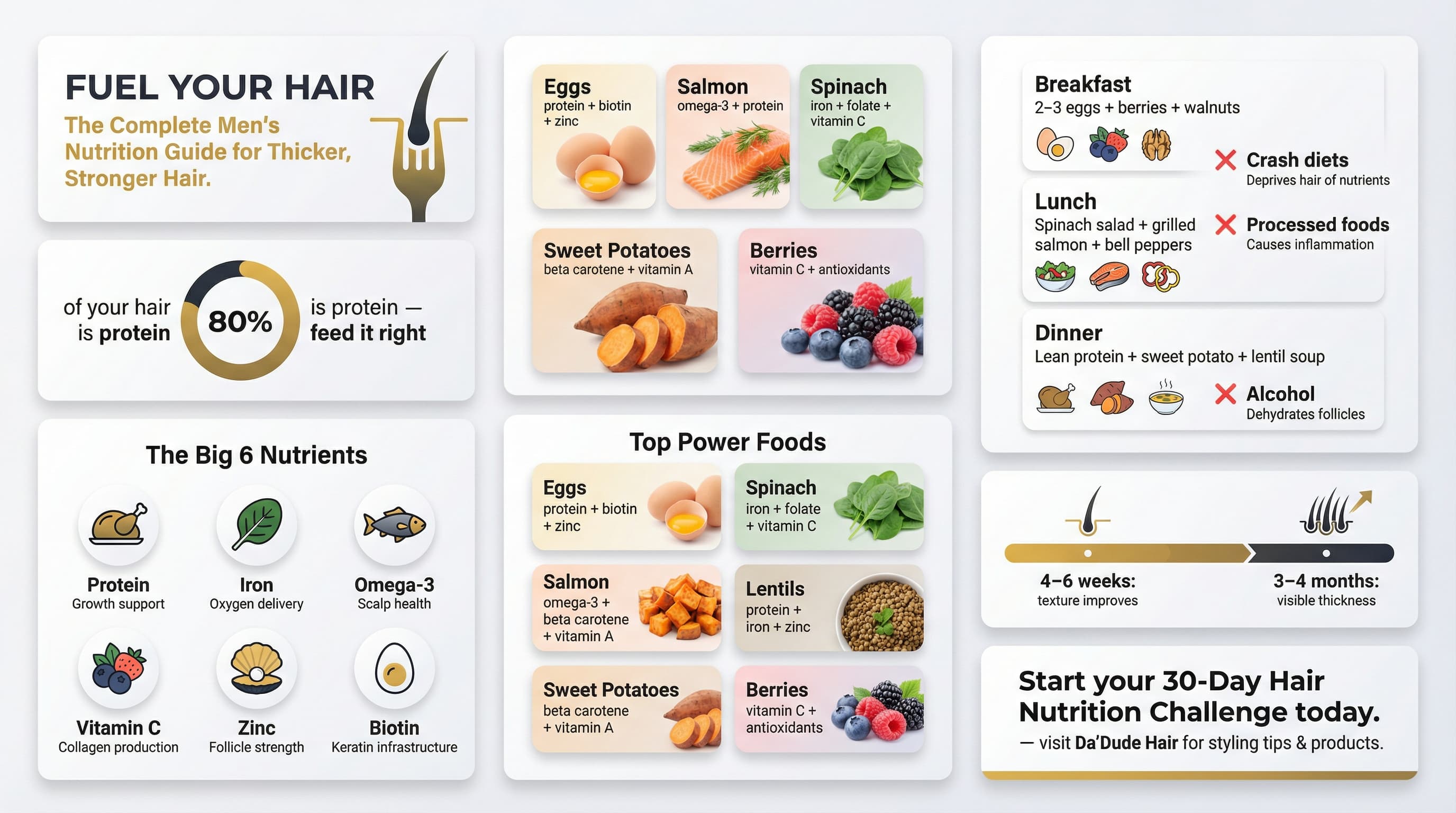
Here's a fact that will change how you think about your diet forever: your hair is approximately 80% protein. That protein is called keratin, and it's the structural foundation that gives your hair its strength, flexibility, and ability to grow. Without adequate keratin production, your strands become brittle, weak, and prone to breakage before they ever reach their full potential.
When you don't consume enough protein for hair growth, your body makes a choice—and your hair loses. As noted by the Cleveland Clinic, protein is essential for every structure in your body, including hair. When protein intake drops, hair growth essentially "rests," older hairs fall out, and you experience noticeable thinning.
The minimum recommended daily protein intake for men is around 56 grams, but if you're actively trying to improve your hair health, you may want to aim higher. The key is choosing high-quality protein sources that your body can efficiently convert into the keratin building blocks your follicles are starving for.
The Protein Powerhouses You Need
Not all protein is created equal when it comes to hair health. Lean meats like chicken, turkey, and fish deliver the amino acids your hair craves—particularly cysteine and methionine, which are the sulfur-containing amino acids crucial for keratin synthesis. Eggs are another non-negotiable addition to your diet. They're packed with protein, biotin, zinc, selenium, and other hair-healthy nutrients that work synergistically to promote growth. If you're looking for ways to maintain healthy hair, protein should be your foundation.
The beauty of eggs is their versatility. Scrambled with breakfast, hard-boiled as a snack, or poached over your lunch—however you prepare them, your hair follicles will thank you. And don't skip the yolk; that's where the biotin lives, and biotin is essential for keratin production.
Iron: The Oxygen Carrier Your Follicles Demand
Your hair follicles are among the most metabolically active tissues in your entire body. They're constantly working, constantly dividing, constantly producing new cells. And all of that activity requires one thing above all else: oxygen.
Iron is the mineral that makes oxygen delivery possible. It's the key component of hemoglobin, the protein in red blood cells that carries oxygen throughout your body—including to your scalp. When iron levels drop, your follicles are the first to suffer. According to experts, iron deficiency is the most common nutritional deficiency in the world and a well-known cause of hair loss.
Studies have demonstrated lower levels of serum ferritin (iron stored in your blood) among those with hair loss conditions including telogen effluvium—a common but reversible form of hair shedding. The good news? This type of hair loss responds incredibly well to dietary intervention.
Iron-Rich Foods That Deliver Results
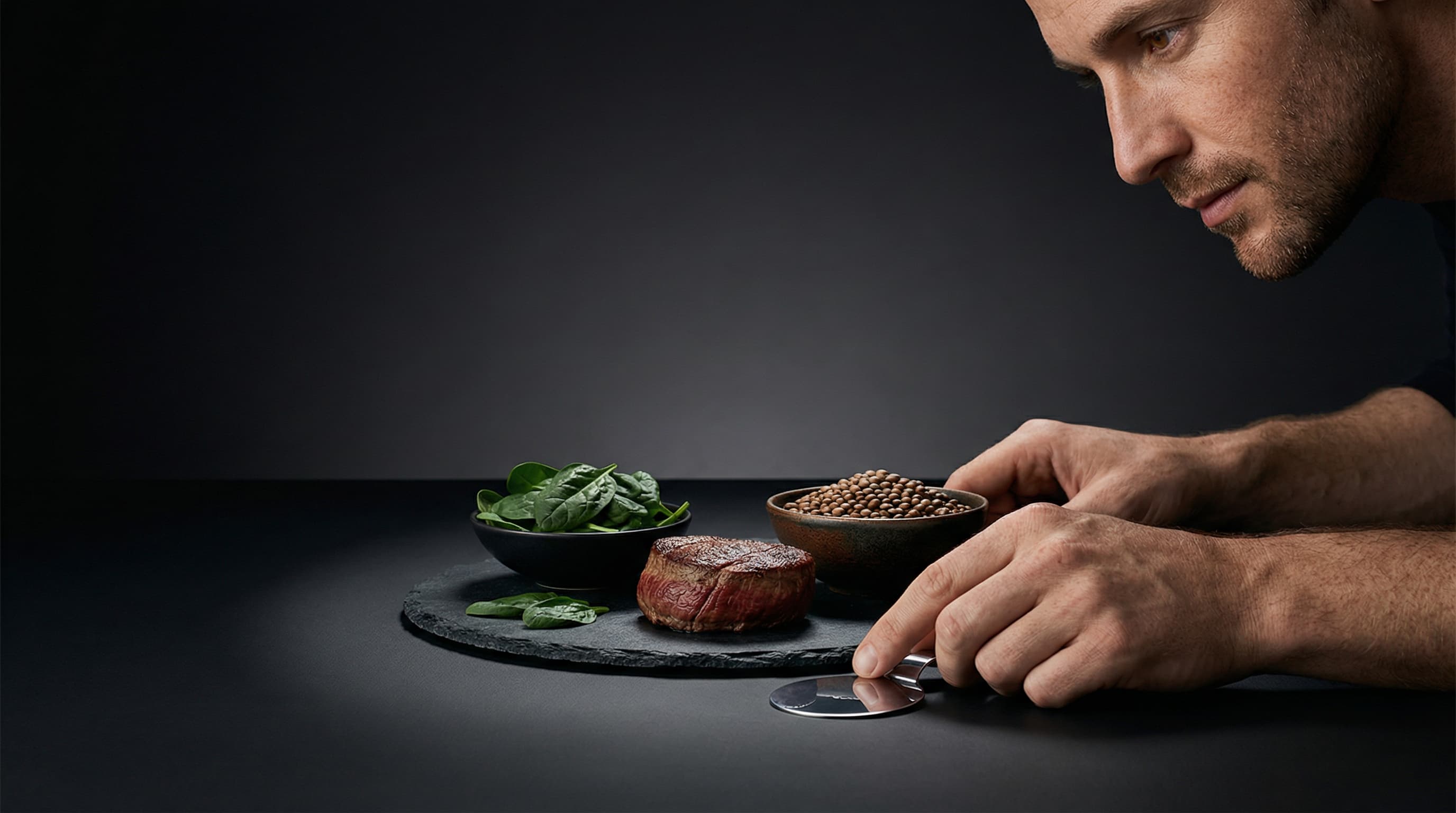
Red meat, particularly beef, is one of the most bioavailable sources of iron—meaning your body absorbs it efficiently. Spinach and other dark leafy greens offer iron alongside folate, vitamin C, and beta carotene, creating a nutrient combination that keeps your scalp healthy and your hair moisturized. If you're dealing with hairline concerns, addressing iron deficiency should be your first step.
Lentils deserve special mention here. They're packed with protein, iron, and zinc—the trifecta of hair health nutrients. For vegetarians especially, lentils are an essential part of any hair-healthy diet. Aim for half to one cup of cooked lentils three to five times per week, and watch how your hair responds.
Omega-3 Fatty Acids: The Scalp's Secret Weapon
Here's something most men never consider: the health of your hair starts with the health of your scalp. Your scalp is skin, and skin needs specific nutrients to stay hydrated, balanced, and capable of supporting healthy follicles. That's where omega-3 fatty acids become absolutely essential.
Your body cannot produce omega-3s on its own—you have to get them from food or supplements. These essential fatty acids have powerful anti-inflammatory properties that minimize oxidative stress on your scalp. They help keep both your scalp and individual hair strands hydrated, adding the shine and flexibility that make hair look healthy and full.
Research highlighted by WebMD confirms that fatty fish like salmon, sardines, and mackerel are packed with omega-3s that protect against hair thinning and promote growth. Most adults can get all the omega-3 fatty acids they need by eating just two servings of salmon weekly.
Beyond Fish: Other Omega-3 Sources
If you're not a fish lover, don't panic. Walnuts, flaxseeds, and chia seeds offer plant-based omega-3s that support your hair goals. Chia seeds also contain zinc and copper—two minerals essential for protein transformation and follicle regeneration. Sprinkle them on your morning oatmeal or blend them into smoothies for an easy nutrient boost.
The key is consistency. Your body doesn't store omega-3s long-term, so you need a steady supply. Making fatty fish or plant-based alternatives a regular part of your routine isn't optional—it's foundational for maintaining thick, healthy hair as you age.
Vitamin C: The Collagen Connection
Vitamin C might be famous for supporting your immune system, but its role in hair health is massively underrated. This powerful antioxidant protects your hair follicles from damage caused by free radicals—unstable molecules that exist naturally in your body and environment that can weaken follicles over time.
But that's just the beginning. Vitamin C is essential for collagen production—the protein that strengthens hair and prevents it from becoming brittle and breaking. It also dramatically improves your body's ability to absorb iron from plant-based sources. So that spinach you're eating for iron? Pair it with bell peppers or citrus for maximum impact.
Berries are particularly potent sources. One cup of strawberries delivers up to 113% of your daily vitamin C requirement. Guava is another powerhouse—a single cup provides more than twice your daily needs. For men working to prevent receding hairlines, vitamin C should be a daily priority.
Zinc: The Growth Cycle Regulator
Zinc doesn't get the attention it deserves. This trace mineral plays a critical role in hair tissue growth and repair, and it helps keep the oil glands around your follicles working properly. When zinc levels drop, hair loss follows—sometimes dramatically.
According to Healthline research, a lack of zinc in the diet can promote telogen effluvium—that reversible form of hair loss caused by nutritional deficiency. The good news is that addressing zinc deficiency can reverse these effects.
Oysters are the undisputed champions of zinc content—one medium oyster provides up to 96% of daily zinc needs for women and 75% for men. But if oysters aren't your thing, beef, crab, lobster, and even fortified cereals can help you hit your targets. Nuts like almonds and cashews also contribute meaningful amounts while delivering other hair-supporting nutrients.
Biotin: The Keratin Production Catalyst
You've probably seen biotin supplements marketed everywhere for hair, skin, and nails. There's a reason for that—biotin, also known as vitamin B7, is directly involved in the production of keratin. Without adequate biotin, your hair simply cannot build the structural protein it needs to stay strong.
Biotin deficiency leads to hair loss and thinning that's impossible to ignore. The good news is that deficiency is relatively rare if you're eating a balanced diet, and your body absorbs biotin from food far more efficiently than from supplements. Eggs (especially the yolks), nuts, sweet potatoes, and whole grains are all excellent sources.
For men focused on improving hair texture, ensuring adequate biotin intake creates the foundation for stronger, more resilient strands that style better and look healthier throughout the day.
The Sweet Potato Advantage: Beta Carotene Brilliance
Sweet potatoes deserve a spotlight in any conversation about hair nutrition. They're loaded with beta carotene—an antioxidant your body converts into vitamin A. And vitamin A is essential for cell growth, including the cells that form your hair.
Vitamin A also triggers your scalp's sebaceous glands to produce sebum—the natural oil that keeps your hair moisturized and protected. Without adequate sebum production, hair becomes dry, dull, and prone to breakage. As WebMD notes, vitamin A helps protect against dry, dull hair while encouraging healthy growth.
One medium sweet potato provides more than enough beta carotene to cover your daily vitamin A needs. Carrots, pumpkin, cantaloupe, and mangoes offer similar benefits. The orange color in these foods is literally your visual cue that they're packed with this essential nutrient.
Building Your Hair Transformation Meal Plan
Knowledge without action is just entertainment. Now that you understand which nutrients your hair craves, it's time to put this information into practice. The most successful men don't leave their nutrition to chance—they build systems that guarantee results.
Start your day with eggs. Two to three eggs provide protein, biotin, and zinc before you've even left for work. Add a handful of berries for vitamin C and antioxidant protection. If you have time for oatmeal, top it with walnuts and chia seeds for omega-3s and additional zinc.
At lunch, make leafy greens the foundation of your plate. Spinach salad with grilled salmon delivers iron, protein, and omega-3s in a single meal. Add bell peppers for vitamin C that enhances iron absorption. This isn't about restriction—it's about strategic abundance.
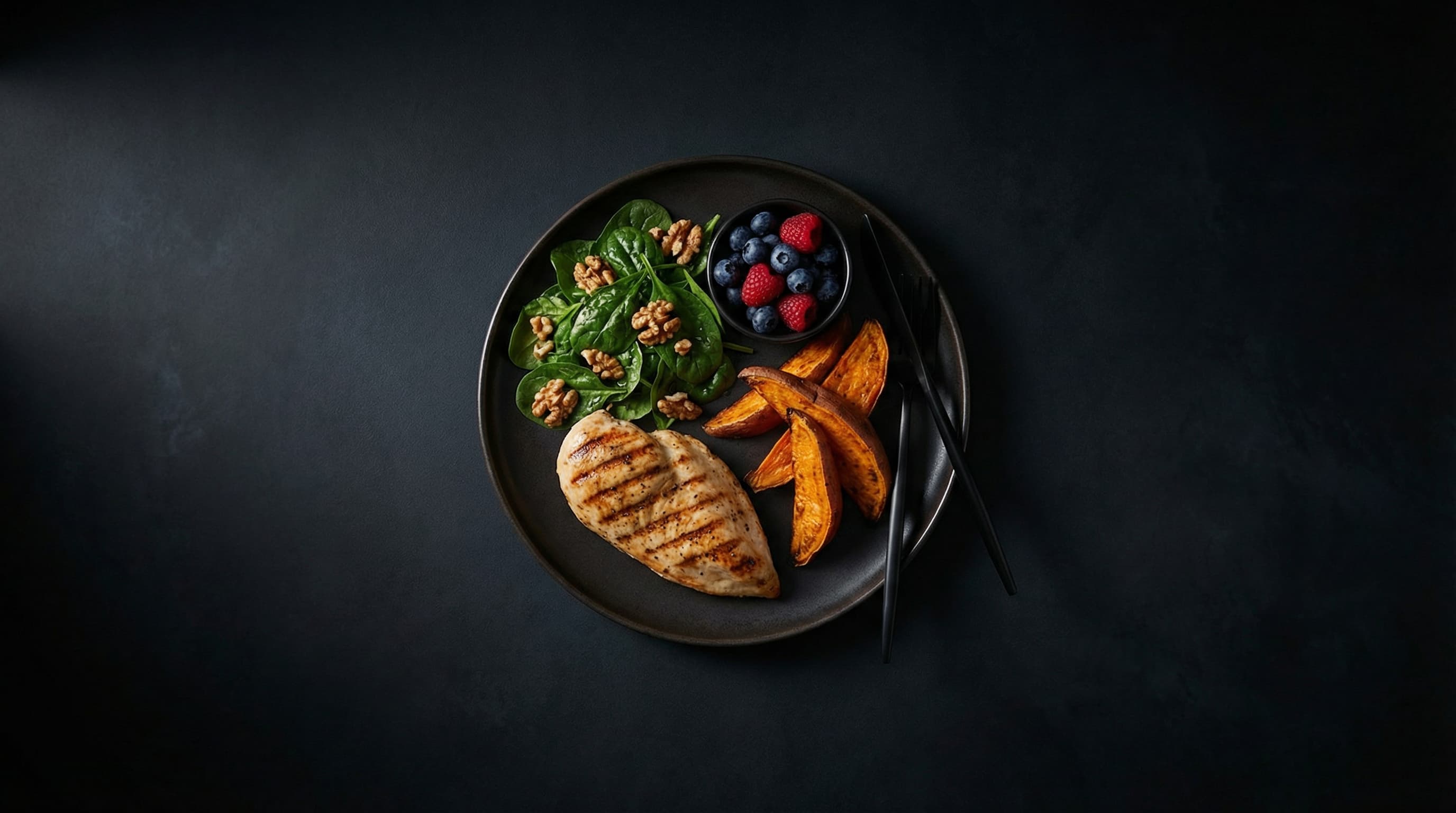
For dinner, rotate between lean proteins—chicken, beef, and fish throughout the week. Sweet potatoes as a side dish cover your beta carotene needs. Lentil soup once or twice weekly adds plant-based protein and iron variety. Each meal becomes an investment in your future appearance.
The Hydration Factor
No conversation about hair nutrition is complete without addressing hydration. Water makes up nearly 25% of the weight of a single hair strand. When you're dehydrated, your hair becomes dry, weak, and prone to breakage—no matter how perfect your diet is.
Aim for at least eight glasses daily, more if you're active or live in a dry climate. Your scalp needs hydration to produce healthy sebum, your follicles need hydration to function optimally, and your hair shafts need hydration to maintain flexibility and shine.
What to Avoid: The Hair Health Saboteurs
Building new habits is only half the equation. You also need to identify what's working against you. Highly processed foods, excessive sugar, and alcohol can all interfere with nutrient absorption and contribute to inflammation that affects your scalp and follicles.
Crash diets and severe calorie restriction are particularly damaging. When your body doesn't receive enough nutrients, it prioritizes vital organs over hair production. This is why many men experience significant shedding after extreme dieting—their bodies simply can't maintain hair growth under nutritional stress.
The Mediterranean diet approach—emphasizing whole foods, lean proteins, healthy fats, and abundant vegetables—consistently shows positive results for hair health in research. It's not about perfection; it's about progress and consistency.
Your 30-Day Hair Nutrition Challenge
Real change requires real commitment. Here's your challenge: for the next 30 days, consciously include at least one food from each major category daily—protein, iron, omega-3s, vitamin C, zinc, and biotin. Track how you feel, note any changes in your energy levels, and pay attention to your hair.
Most men notice improvements in hair texture and strength within four to six weeks of consistent nutritional focus. Visible growth and thickness changes typically become apparent after three to four months. This isn't a quick fix—it's a fundamental upgrade to how your body builds and maintains your hair.
Combine your improved nutrition with proper styling techniques and quality products like Da'Wax for that signature matte finish, and you're creating a comprehensive approach to looking your absolute best. Your hair is one of the first things people notice—make sure it's making the statement you want.
The Decision Is Yours
Every day, you make decisions about what goes into your body. From this moment forward, those decisions can either support the hair you want or work against it. The information you now have isn't available to most men—they'll keep buying products and wondering why nothing changes.
You know different. You understand that thicker, healthier hair starts with the choices you make at every meal. The question isn't whether this works—the science is clear. The question is whether you're willing to commit to the process.
Start today. Choose one meal to upgrade. Add the eggs at breakfast. Swap in the salmon at dinner. Let the small changes compound into results you can see and feel. Your future self—standing in front of that mirror with hair that actually looks and feels the way you want—will thank you for making the decision right now.
Because the truth is this: your hair is waiting for you to give it what it needs. Stop starving it. Start feeding it. And watch what happens when your body finally has the raw materials to do what it was designed to do.
Comment