
Winter Hair Care for Men: Complete Seasonal Transition Guide 2026
Feb 20,2026
Listen up. Right now, at this very moment, your hair is fighting a battle you might not even know about. As the temperature drops and the seasons shift, everything changes—and I mean everything. The air, the humidity, the way your scalp produces oil—it's a complete environmental transformation. And here's the truth that separates the men who look sharp year-round from those who struggle: your summer hair routine will absolutely destroy your winter look if you don't adapt.
I've spent years studying what separates people who succeed from those who merely survive. And you know what? The same principle applies to your grooming. The men who look phenomenal in every season aren't genetically blessed—they're strategically prepared. They understand that excellence isn't about doing the same thing over and over; it's about intelligent adaptation.
So let's dive deep into the science of seasonal hair care and give you the exact blueprint you need to dominate every month of the year.
The Science Behind Seasonal Hair Changes

Before we talk solutions, let's understand the problem at a molecular level. Your hair isn't just keratin strands sitting passively on your head. It's a dynamic system constantly responding to environmental stimuli.
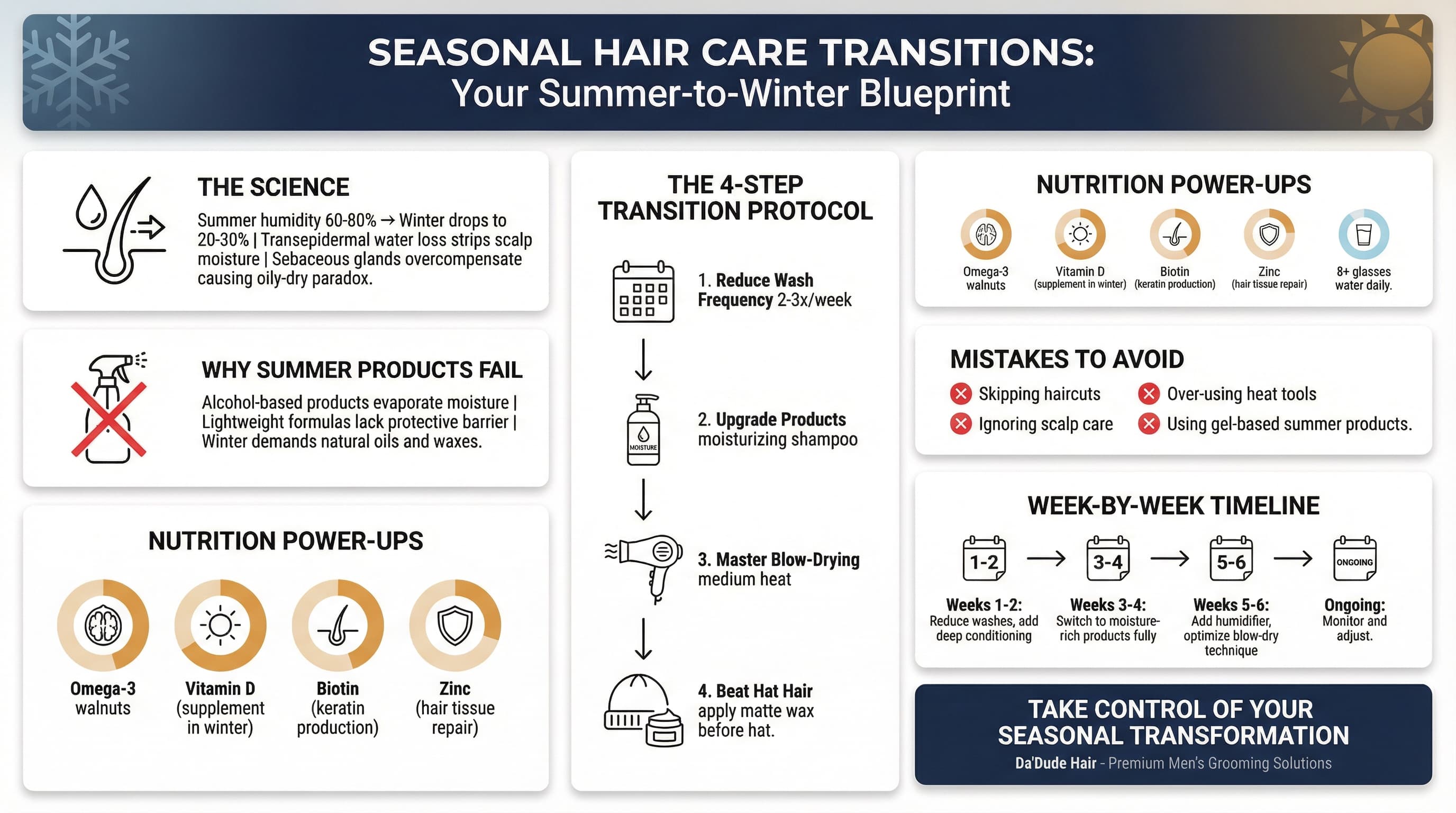
During summer, humidity levels typically range from 60-80%. This moisture in the air actually helps hydrate your hair shaft from the outside. Your sebaceous glands—those microscopic oil factories in your scalp—produce sebum at a moderate rate because the external moisture reduces the need for internal lubrication.
Then winter arrives like a wrecking ball. Indoor heating slashes humidity to a brutal 20-30%. According to dermatological research published in medical journals, this dramatic moisture drop triggers what scientists call transepidermal water loss (TEWL). Your scalp starts losing moisture faster than it can replenish it. The result? Dry, flaky scalp. Brittle hair. Static electricity that makes you look like you stuck your finger in a socket.
But here's where it gets interesting: your body actually tries to compensate. Your sebaceous glands may kick into overdrive, producing excess oil to combat the dryness. This can create a paradoxical situation where your scalp is both dry AND oily—itchy with flakes while your roots look greasy. Sound familiar? You're not alone, and you're definitely not stuck with this.
Why Your Summer Products Fail in Winter
Let me be direct with you: using the same hair styling products in December that worked in July is like wearing shorts in a snowstorm. Technically possible, but strategically insane.
Summer styling products are often designed with lighter formulations. Water-based products and alcohol-containing sprays work fine when humidity helps maintain moisture. But in winter? That alcohol evaporates and takes precious moisture with it. Those lightweight formulas can't provide the protective barrier your hair desperately needs.
Here's the game-changer most men miss: winter demands products with natural oils and waxes that create a protective shield around each hair strand. Products containing beeswax, jojoba oil, and argan oil don't just style—they protect. They lock in moisture while blocking out the harsh, dry air that's trying to strip your hair bare.
Da'Wax, for instance, uses a beeswax-based formula that serves dual purposes: it gives you that strong hold with a matte finish AND it creates a moisture-locking barrier. This isn't about vanity—it's about intelligent protection.
The Winter Hair Care Transition Protocol
Alright, enough theory. Let's get practical. Here's your step-by-step protocol for transitioning from summer to winter hair care:
Step 1: Reduce Wash Frequency
In summer, you might wash your hair daily to combat sweat and excess oil. Winter demands a different approach. Experts recommend washing hair only 2-3 times per week during colder months. Why? Every wash strips natural oils from your scalp—oils that are now precious commodities in the dry air battle.
When you do wash, drop the water temperature. I know, I know—a hot shower feels amazing when it's freezing outside. But hot water is a scalp assassin. It strips oils faster than cold air can deplete them. Lukewarm water preserves your scalp's protective barrier while still getting the job done.
Step 2: Upgrade Your Product Arsenal
Time to audit your bathroom shelf. Any product containing alcohol as a main ingredient? Move it to the back for spring. Products with sulfates? Consider gentler alternatives during winter months.
What you need now:
- Moisturizing shampoo – Look for formulas with natural oils
- Deep conditioning treatment – Use weekly to restore moisture
- Wax-based styling products – Like Da'Wax for professional styling that protects while it holds
- Leave-in conditioner – For daily moisture reinforcement

Remember what I always say about using the right amount of hair wax: in cold weather, warm that product between your palms longer before applying. The colder temperatures make products more viscous, so extra warming activates the polymers better.
Step 3: Master the Art of Blow-Drying
Here's where most men sabotage themselves: they either skip blow-drying entirely (leaving hair wet and vulnerable in cold air) or they blast it with scorching heat (cooking the moisture right out).
The winning strategy? Use medium heat at a safe distance. Better yet, finish with a blast of cool air. This seals the hair cuticle, locking in whatever moisture you've managed to preserve. It also reduces frizz and static—two winter enemies that make you look like you've been fighting with a balloon.
Step 4: Protect Against Hat Hair
Hats are non-negotiable in winter. But they create their own problems: flat, lifeless hair that looks like it's been pressed in a vice. Plus, the friction can damage hair strands and trap sweat against your scalp.
Solution: Before putting on your hat, apply a small amount of matte wax or texturizing product. This gives your hair some structural integrity to bounce back when the hat comes off. When you remove your hat, run your fingers through your hair immediately and give it a quick reshape. With the right product already in there, you'll restore volume in seconds.
The Beard Factor: Winter Protection for Facial Hair
If you're rocking facial hair, listen closely: your beard faces the exact same winter assault as your head—maybe worse. It's constantly exposed to cold wind, dry air, and the abrasive friction of scarves and coat collars.
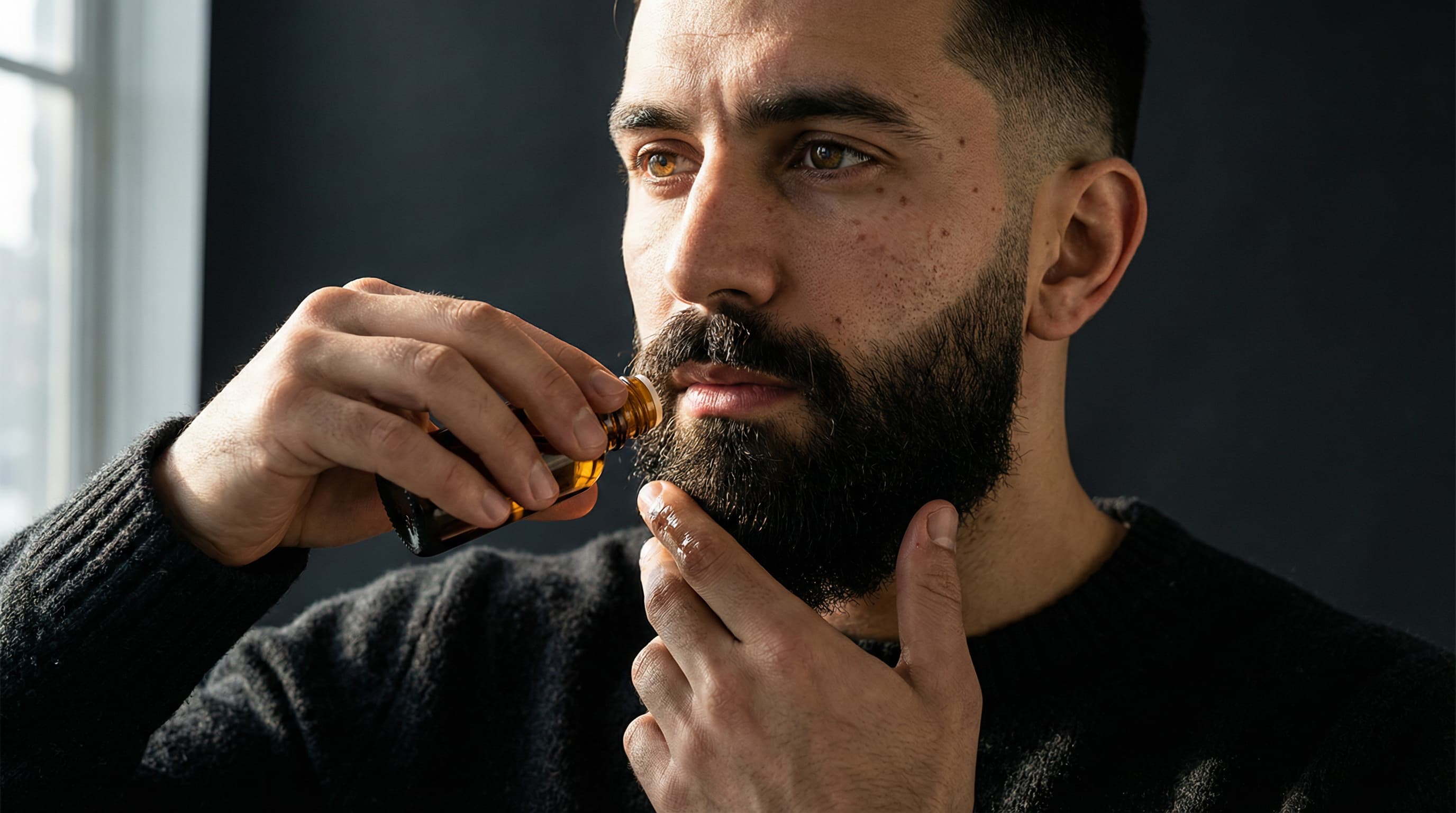
Winter is when quality beard oil becomes absolutely essential. The natural oils in products like Da'Beard Oil—jojoba, argan, safflower—penetrate both the hair and the skin beneath. They combat the itchiness that plagues so many bearded men in winter while keeping facial hair soft enough that it won't sandpaper your partner's face.
Apply beard oil daily after showering when your pores are open and receptive. A few drops massaged from skin to tip create a protective, hydrating barrier that lasts all day. This is preventing beard rash and irritation before it starts—proactive care rather than reactive damage control.
Nutrition: The Internal Game of Seasonal Hair Health
Here's something most grooming guides completely ignore: your hair's winter health starts from the inside. The foods you eat directly impact your hair's ability to resist environmental stress.
According to Cleveland Clinic dermatologists, certain nutrients become especially critical during winter months:
- Omega-3 fatty acids – Found in salmon, mackerel, and walnuts. These healthy fats nourish hair follicles and support scalp health.
- Vitamin D – Sunlight exposure drops in winter, and vitamin D deficiency can contribute to hair thinning. Consider supplementation or vitamin D-rich foods.
- Biotin – This B-vitamin supports keratin production—the protein your hair is literally made of.
- Zinc – Essential for hair tissue growth and repair. Found in oysters, beef, and pumpkin seeds.
Hydration matters too. Most people drink less water in winter because they don't feel as thirsty. Big mistake. Your body—including your scalp—needs consistent hydration regardless of temperature. Aim for at least 8 glasses daily, and watch your hair thank you for it.
Environmental Optimization: Your Secret Weapon
Want to know what separates good winter hair care from great winter hair care? Environmental control.
Indoor heating is destroying your hair 8-12 hours a day. Combat this by investing in a quality humidifier for your bedroom. Running one while you sleep can dramatically reduce the moisture loss that happens overnight. Your skin, sinuses, and hair will all benefit.
Also, consider this: the air quality in your home affects your hair health. Dust, heating system particles, and dry air create a hostile environment for healthy hair. Regular ventilation—even brief exposure to fresh outdoor air—helps reset the balance.
Common Winter Hair Mistakes to Avoid
Let me save you from the pitfalls that trap most men every winter:
Mistake #1: Skipping haircuts. Some guys think letting hair grow longer in winter provides protection. Partially true, but split ends travel up the hair shaft, causing progressive damage. Maintain regular haircuts every 6-8 weeks to keep ends healthy.
Mistake #2: Over-using heat tools. Straighteners and curling irons become tempting when humidity doesn't naturally shape your style. But excessive heat on already-dry hair is a recipe for damage. If you must use heat tools, always apply a heat protectant first.
Mistake #3: Ignoring your scalp. Your scalp is skin—it needs attention just like your face. If you're experiencing flakes or itchiness, consider adding a gentle scalp exfoliation to your weekly routine. This removes dead skin cells and allows moisturizing products to penetrate better.
Mistake #4: Using the wrong products. This connects back to what I mentioned about common hair styling mistakes. Gel-based products that worked in summer will leave your hair stiff and vulnerable. Switch to flexible, wax-based formulas that move with your hair while protecting it.
The Transition Timeline: Week by Week
Change doesn't happen overnight—and neither should your hair routine transition. Here's a practical timeline:
Week 1-2 (Early Autumn): Begin reducing wash frequency. Introduce a weekly deep conditioning treatment. Start using slightly heavier styling products.
Week 3-4: Switch fully to moisture-rich shampoo and conditioner. Begin daily use of protective styling wax. If you have a beard, start daily beard oil application.
Week 5-6: Optimize your environment—get that humidifier running. Adjust blow-drying technique to medium heat with cool finish. Stock up on winter-appropriate products.
Ongoing: Maintain the system. Pay attention to how your hair responds and adjust as needed. Everyone's hair is different, so treat these guidelines as starting points, not rigid rules.

Take Control of Your Seasonal Transformation
Here's what separates champions from everyone else: they don't let circumstances dictate their outcomes. They take control. They adapt. They evolve.
Your hair doesn't have to be a victim of winter. With the right knowledge, the right products, and the right mindset, you can look just as sharp in January as you do in July—maybe sharper.
The question isn't whether winter will challenge your hair. It will. The question is: are you going to let it win, or are you going to master the transition?
You've got the blueprint now. The science is clear. The strategy is laid out. The only thing left is execution.
Your move.
For the latest updates and upcoming promotions like our Facebook Page @DaDudehair and follow us on Instagram @dadudehair.
Comment