10 Tips For Men To Prevent Hair Damage
Mar 09,2026
How Hair Damage Happens
Your hair takes a beating — here's how to fight back. Let's be honest: most guys don't think twice about their hair until something goes wrong. Maybe you noticed more strands in the shower drain, or your once-thick mane is starting to look a little flat and lifeless. The truth is, hair damage doesn't happen overnight. It's the result of daily habits that slowly chip away at your hair's structure — and the good news is, most of it is completely preventable.
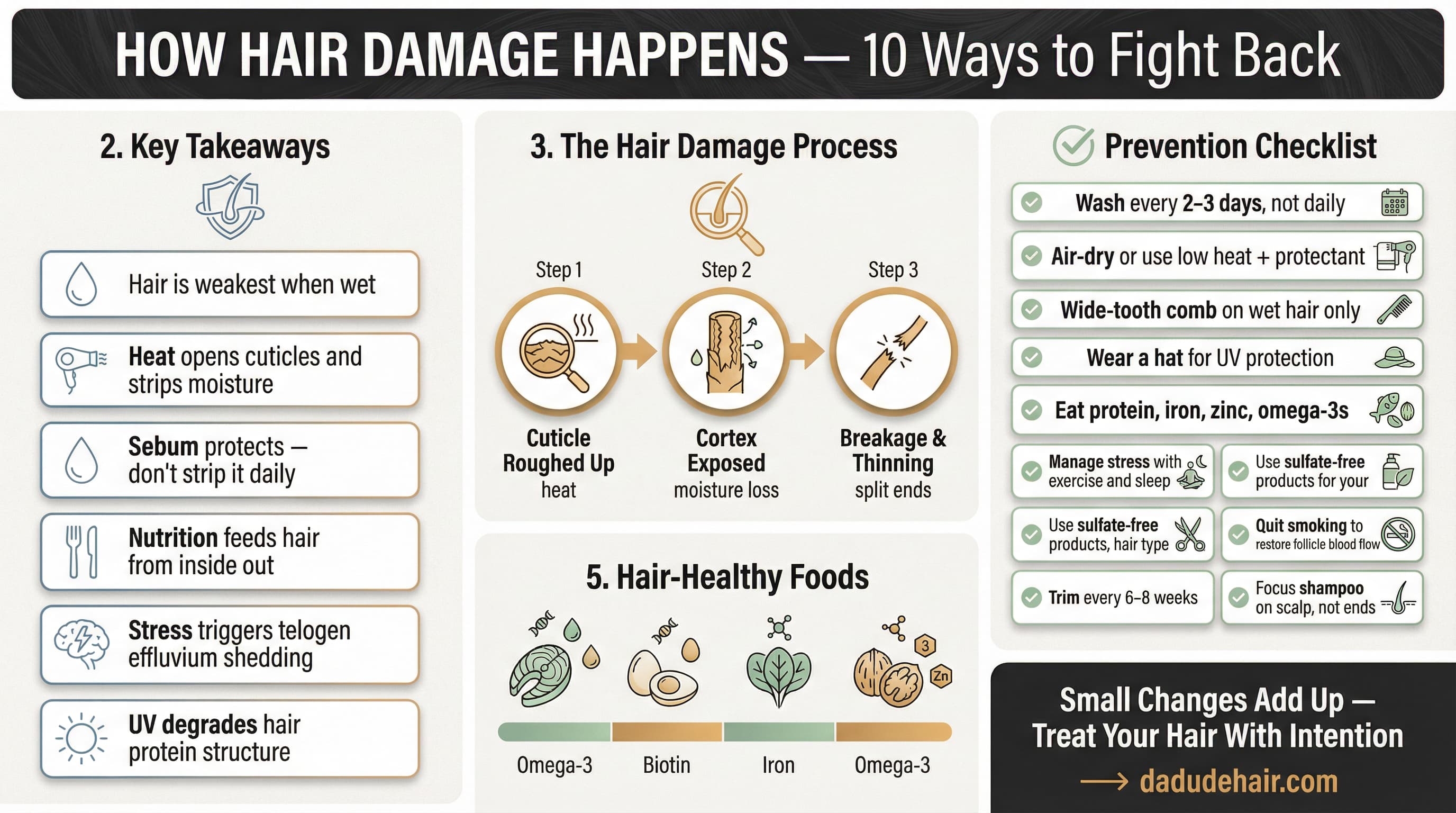
According to dermatologists and hair science researchers, the hair shaft is a complex structure made up of a protective outer cuticle, a middle cortex, and an inner medulla. When that outer cuticle layer gets roughed up — through heat, chemicals, or mechanical stress — it leads to the brittle, dull, frizzy mess nobody wants. A study published in the International Journal of Trichology confirms that repeated rough washing, chemical treatments, and UV exposure can fracture the cell membrane complex of the hair fiber, leading to progressive structural damage. Here's how to keep that from happening.
1. Stop Overwashing Your Hair
If you're shampooing every single day, you might be doing more harm than good. Shampoo does an excellent job of removing dirt and product buildup, but it also strips away sebum — the natural oil your scalp produces to keep hair moisturized and protected. The American Academy of Dermatology (AAD) recommends washing based on how oily your scalp gets rather than following a rigid daily schedule. For most men, every two to three days is the sweet spot. If your hair is particularly dry or coarse, you can stretch that even further.
2. Turn Down the Heat
Whether it's a scorching hot shower or a blow dryer cranked to its highest setting, excessive heat is one of the biggest enemies of healthy hair. High temperatures open the hair cuticle and strip away moisture, leaving strands stiff and prone to breakage. According to Healthline, keeping your blow dryer at least five to ten centimeters away from your hair and not lingering in one spot for more than 15 to 30 seconds can significantly reduce thermal damage. Better yet, let your hair air-dry whenever possible. The AAD notes that limiting heat tools and using a heat-protectant product when you do style are essential habits.

3. Be Gentle When Your Hair Is Wet
Here's something most men don't realize: your hair is at its weakest when it's wet. Water causes the hair shaft to swell, making it more elastic and far more susceptible to stretching and snapping. Instead of raking a brush through soaking wet hair, use a wide-tooth comb and start detangling from the ends, working your way up. The AAD advises wrapping hair gently in a towel or a t-shirt to absorb moisture rather than roughly rubbing it dry, which creates friction and leads to breakage. These are among the most common hair styling mistakes men make — and one of the easiest to stop damaging your hair.
4. Protect Your Hair From the Sun
You wear sunscreen on your face, so why ignore the hair on top of your head? UV radiation doesn't just damage skin — it also degrades the protein structure of your hair, leading to dryness, color fading, and brittleness. The Mayo Clinic recommends protecting your hair from sunlight and other sources of ultraviolet light. Wearing a hat on sunny days is the simplest and most effective move. This is especially important if you've recently colored or bleached your hair, which makes strands even more vulnerable.
5. Eat for Your Hair
Your hair is essentially a reflection of what's going on inside your body. A diet lacking in key nutrients can show up as thinning, dullness, or excessive shedding. The Mayo Clinic identifies poor nutrition as a risk factor for hair loss, while Healthline points to deficiencies in iron, zinc, copper, and vitamin D-3 as contributors to weakened hair and even premature graying. Load up on protein-rich foods like eggs and fish, iron sources like spinach and salmon, and omega-3-packed options like walnuts and seeds. Think of it as feeding your hair from the inside out.
.jpg?w=2752&h=1536)
6. Manage Your Stress Levels
Stress doesn't just mess with your mood — it can literally make your hair fall out. The Mayo Clinic notes that a very stressful event can trigger a condition called telogen effluvium, where large numbers of hair follicles prematurely enter the resting phase and shed months later. Healthline explains that stress spikes cortisol levels, which disrupts the hormonal balance needed for healthy hair growth. If you're noticing hair loss, stress could be a factor. Regular exercise, meditation, and adequate sleep aren't just wellness buzzwords — they're legitimate hair-care strategies.
7. Choose the Right Products for Your Hair Type
Not all shampoos and conditioners are created equal, and using the wrong ones can accelerate damage. The AAD emphasizes the importance of choosing products formulated for your specific hair type, whether it's fine and straight, thick and curly, or somewhere in between. Many conventional products contain sulfates like sodium lauryl sulfate, which can aggressively strip natural oils. Look for gentler, sulfate-free options, and always follow up your shampoo with a conditioner to restore moisture and reduce tangles.
8. Stop Smoking
If you needed another reason to quit, here it is: smoking is linked to hair loss. The Mayo Clinic states that some studies show an association between smoking and baldness in men. Cigarette smoke restricts blood flow to the hair follicles, depriving them of the oxygen and nutrients they need to function properly. It also generates oxidative stress, which accelerates aging throughout the body — including your scalp.

9. Get Regular Trims
Even if you're growing your hair out, skipping the barber is a mistake. Split ends don't repair themselves; they travel up the hair shaft and cause further breakage if left unchecked. Healthline notes that without regular trims, frizzy and damaged-looking hair becomes increasingly difficult to manage. A quick trim every six to eight weeks keeps your ends healthy and your hair looking sharp.
10. Don't Ignore Your Scalp
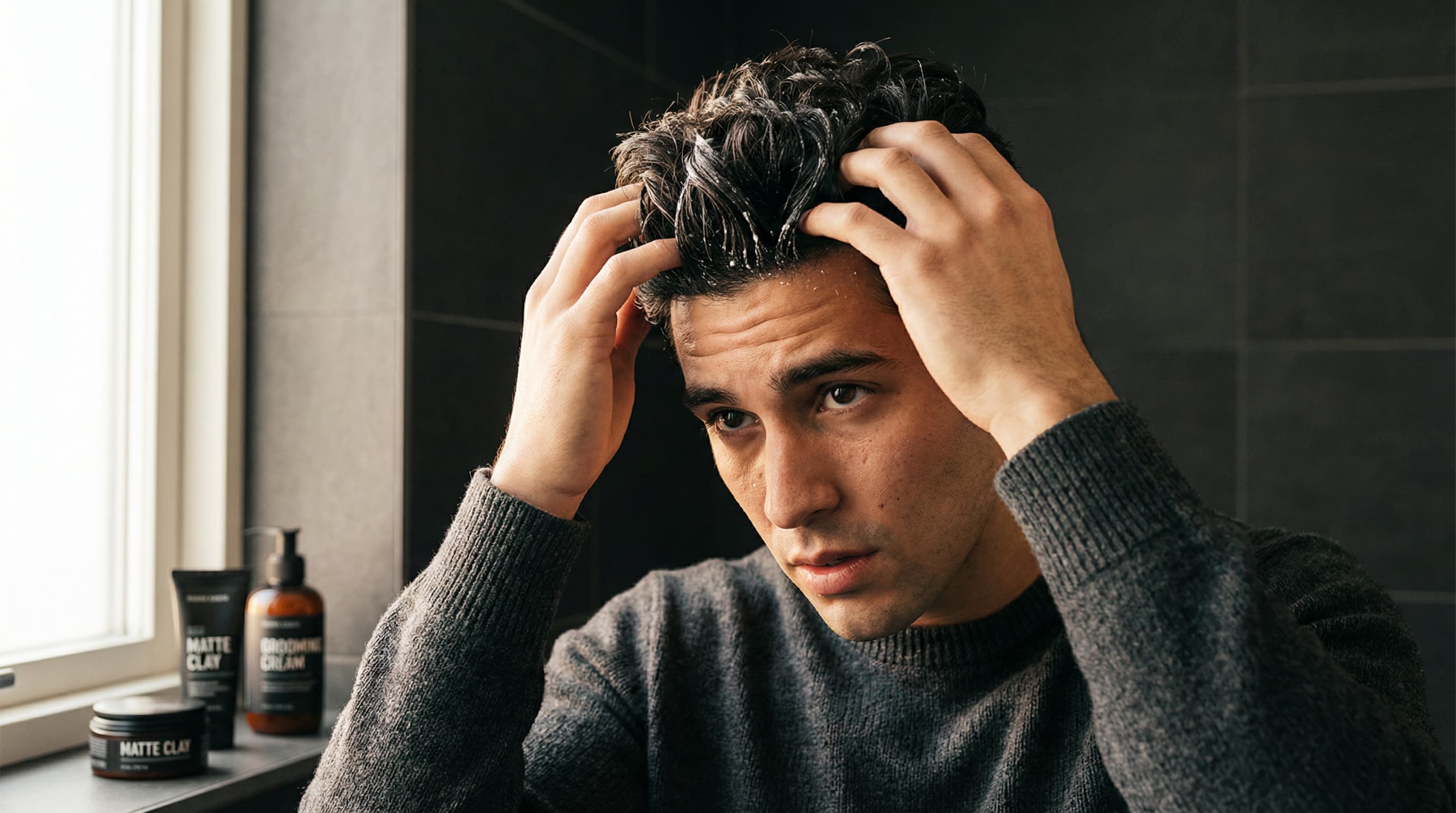
Healthy hair starts with a healthy scalp. Think of your scalp as the soil from which your hair grows — if the soil is neglected, nothing thrives. Conditions like dandruff, seborrheic dermatitis, and product buildup can clog follicles and impair growth. The AAD recommends applying shampoo primarily to the scalp rather than the full length of your hair, which ensures you're cleaning where it matters most without over-drying your ends. If you notice persistent itching, flaking, or redness, a board-certified dermatologist can help identify the underlying issue.
The Bottom Line
Hair damage is rarely caused by a single event. It's the accumulation of small, everyday habits — the scalding showers, the aggressive towel-drying, the nutrient-poor diet — that slowly degrades your hair's health over time. The flip side of that is encouraging: small changes add up, too. Treat your hair with a little more intention and a lot less aggression, and you'll see real results. Whether you're managing post-workout hair or just looking to upgrade your daily routine, consistency is key.
And if you notice sudden or unusual changes in your hair — rapid thinning, patchy bald spots, or excessive shedding — don't tough it out. The Mayo Clinic advises consulting a doctor, as these can sometimes signal underlying medical conditions that need attention. Your hair tells a story. Make sure it's a good one.
Sources: American Academy of Dermatology (aad.org); Mayo Clinic (mayoclinic.org); Healthline (healthline.com); Gavazzoni Dias, M.F. “Hair Cosmetics: An Overview.” International Journal of Trichology, 7(1), 2015.
Comment