
Going Gray: The Modern Man's Complete Guide to Silver Hair
Feb 16,2026
Here's something that might surprise you: going gray isn't about your hair changing color. It's about your hair losing color altogether. Inside every hair follicle on your head, specialized cells called melanocytes work around the clock, producing melanin—the pigment that gives your hair its distinctive shade. When you were a kid, those melanocytes were firing on all cylinders. But here's the reality check: after about ten cycles of hair growth, those melanocyte stem cells begin to slow down, and eventually, they retire from the pigment business entirely.
According to Cleveland Clinic, most men start seeing those first silver strands in their mid-thirties to early forties. Some of you reading this might be nodding your heads because you spotted your first gray at twenty-five. Others might be fifty and wondering what all the fuss is about. That's genetics at work—if your father went gray early, there's a strong chance you're on a similar timeline.
But here's where it gets really interesting. Research published in Nature and highlighted by the National Institutes of Health found that melanocyte stem cells have a unique ability to "dedifferentiate"—essentially, they can transform back into stem cells after producing pigment. The problem? As you age, more and more of these cells get stuck in a differentiated state. They lose their ability to bounce back, and without fresh stem cells producing melanin, your hair grows in without color.

What's Really Causing Your Gray Hair?
Let's get something straight: age is just one piece of this puzzle. Yes, time marches on, and your hair changes with it. But if you're going gray faster than you expected, there might be other factors at play—factors you can actually do something about.
The Stress Connection
You've probably heard someone say, "You're going to give me gray hair!" Turns out, there's real science behind that old saying. When you're under chronic stress, your sympathetic nervous system releases norepinephrine—the same chemical involved in your fight-or-flight response. According to research cited by the American Academy of Dermatology, this chemical surge can force melanocyte stem cells to rapidly transform and exit your hair follicles. Once they're gone, they're gone—and that strand grows in gray for good.
Here's the powerful truth: managing your stress isn't just about your mental health. It's about your physical appearance too. The body and mind are connected in ways we're only beginning to understand.
Nutritional Factors
Your hair needs fuel to stay vibrant, just like the rest of you. Healthline reports that deficiencies in vitamin B12, folate, copper, and iron have been linked to premature graying. These nutrients are essential for melanin production, and when your body doesn't have enough, your hair pays the price.
Think about it this way: you wouldn't expect a high-performance engine to run well on cheap fuel. Your body—including your hair—operates on the same principle. Quality nutrition isn't optional if you want to maintain your natural color as long as possible.
Lifestyle Choices
Here's one you might not want to hear: smoking has been directly linked to premature graying. Research shows that smokers are two and a half times more likely to go gray before age thirty compared to non-smokers. The chemicals in cigarettes damage melanin-producing cells, accelerating the graying process significantly.
Option One: Embrace the Silver
Let me ask you something important: why are you fighting this in the first place? Society has been telling you for years that gray hair equals "old," but look around—that narrative is changing fast. George Clooney, Anderson Cooper, Steve Carell—these men didn't just accept their gray; they made it part of their signature look. And honestly? They look better for it.
Embracing your gray isn't about giving up. It's about making a conscious choice to own who you are at this stage of your life. There's something undeniably powerful about a man who looks in the mirror and says, "This is me. This is my story written in silver and I'm proud of every strand."

Styling Gray Hair for Maximum Impact
Gray hair has a different texture than pigmented hair—it's often coarser, drier, and more prone to wiry behavior. This isn't a flaw; it's an opportunity. The texture gives you natural volume and presence that younger men often struggle to achieve.
When it comes to hairstyles for older men, the key is working with what you've got, not against it. A quality matte finish hair wax like Da'Wax can help you control that texture while adding definition without the greasy shine that screams "trying too hard." Gray hair looks best with natural, textured styles—think deliberate messiness, not helmet hair.
One crucial adjustment: gray hair needs more moisture. Since melanin naturally protects hair from sun damage and drying, gray strands are more vulnerable. Invest in quality conditioning treatments and consider a healthy hair routine that keeps those silver strands looking polished, not parched.
The Power of Proper Grooming
Going gray doesn't mean letting everything else slide. In fact, the opposite is true. When your hair changes, the rest of your grooming needs to step up. A well-maintained beard (gray or not) complements silver hair beautifully. Clean, healthy skin creates contrast that makes your gray look intentional and refined.
Think about the total picture. What makes a man attractive isn't the color of his hair—it's the attention to detail, the confidence, the sense that he has his life together. Gray hair, properly maintained, signals wisdom and experience. Combined with excellent grooming habits, it becomes an asset rather than something to hide.
Option Two: Enhance What You Have
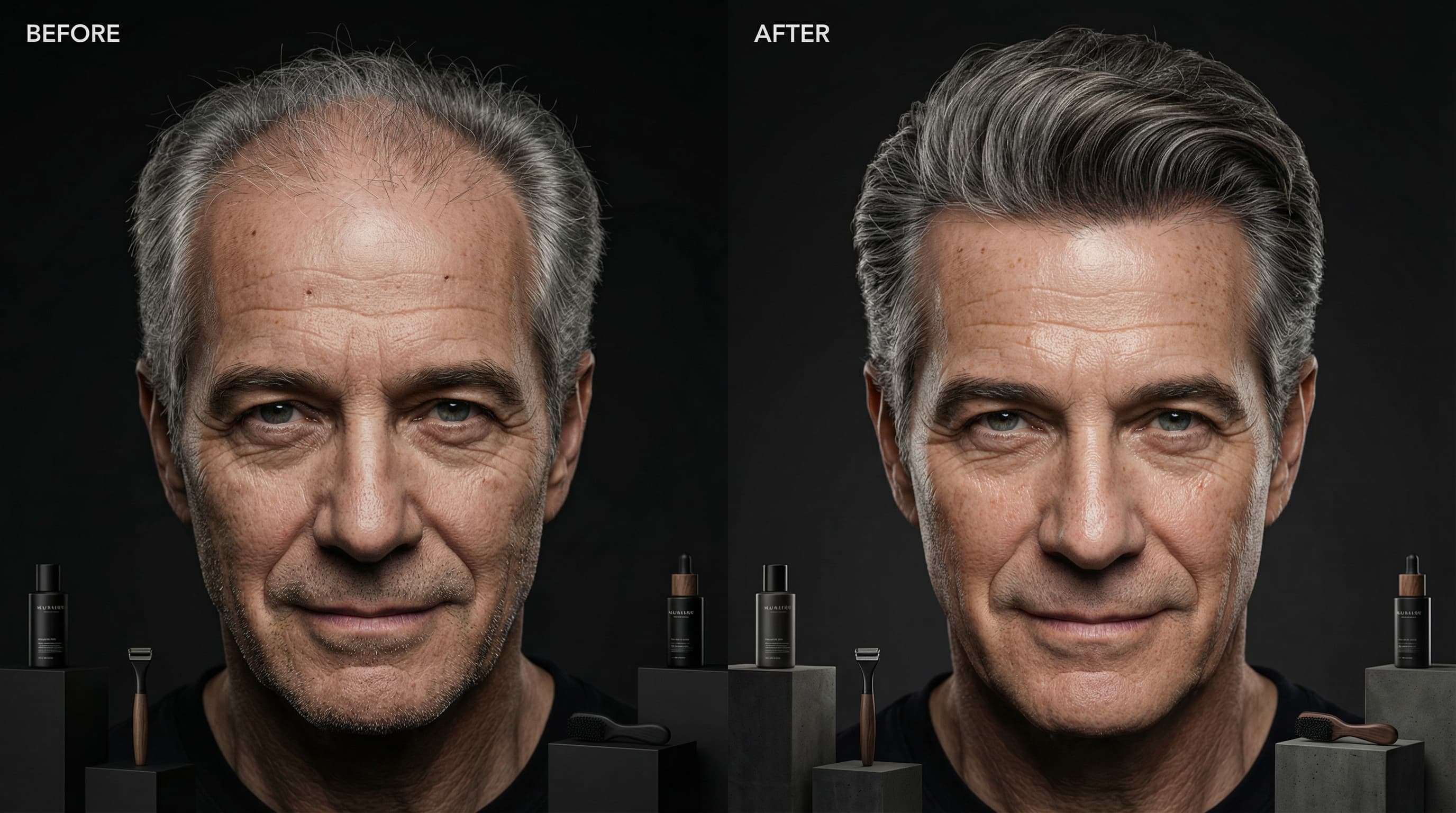
Maybe you're not ready for the full silver fox transformation, but you're also not interested in covering every gray completely. Welcome to the world of strategic enhancement—where you work with your grays rather than against them.
The Salt-and-Pepper Strategy
Some of the most distinguished men in the world rock the salt-and-pepper look, and there's a reason it works so well. The contrast between dark and gray creates natural depth and dimension that solid colors can't replicate. It signals maturity without surrendering your original color entirely.
Products like gradual gray-reducing shampoos can help you find your sweet spot. These formulas work progressively, allowing you to dial in exactly how much gray you want to show. Use them more frequently to reduce visible gray; use them less to let more natural silver come through. You're in control.
.jpg?w=2048&h=1168)
Products That Work With Gray
One thing gray hair absolutely does not need? Shine. Glossy products can make gray hair look thinner and more sparse than it actually is. What you want is matte finish and strong hold—products that add texture and definition while keeping things looking natural.
Understanding what hair wax is and how it compares to gel and pomade becomes especially important when you're dealing with gray. Wax typically offers the matte finish that flatters silver hair, while many gels create unwanted shine. A clay-based product can add volume to hair that's starting to thin—a common companion to graying.
For styling, start with the right amount of product. Gray hair can be more absorbent than pigmented hair, so you might need to adjust your quantities. Start with less than you think you need—you can always add more, but removing excess product from gray hair can be challenging.
Option Three: Cover It Completely
Look, there's absolutely no shame in deciding that gray isn't for you right now. Your appearance is your business, and if covering your gray makes you feel more confident, more yourself, then that's the right choice for you. What matters is doing it well.
Understanding Your Options
The men's hair dye market has evolved dramatically. Gone are the days when your only option was a box of harsh chemicals that turned your hair an obviously unnatural shade. Today's products offer everything from subtle blending to complete coverage, with formulas designed specifically for men's hair and lifestyle.
Temporary solutions include root touch-up sprays and powders that wash out with your next shampoo. These are perfect for special occasions or when you want to test whether covering your gray is right for you without commitment.
Semi-permanent options last through several washes, gradually fading over time. Products like gradual color shampoos deposit a small amount of pigment with each use, giving you control over how much coverage you achieve.
Permanent dyes provide complete coverage that lasts until new growth appears. These require more commitment and regular maintenance but deliver the most dramatic results.
The Golden Rules of Covering Gray
If you're going to color your hair, do it right. First rule: go lighter than you think. One of the biggest mistakes men make is choosing a color that matches their original shade too exactly. Hair color works differently on gray strands, and going too dark almost always looks artificial. Choose a shade one or two levels lighter than your natural color for the most believable results.
Second rule: blend, don't block. Unless you're trying to make a statement, leaving some gray visible often looks more natural than complete coverage. Products designed for "touch of gray" results can help you hit this sweet spot.
Third rule: don't forget your beard. Nothing gives away a dye job faster than a head of dark hair paired with a gray beard. If you're coloring your hair, extend that attention to your facial hair as well. Just be sure to use products specifically designed for beards—the skin on your face is more sensitive than your scalp.
Making Your Decision: A Framework for Action
Here's what separates men who look distinguished from men who just look older: intention. Whatever you decide to do with your gray hair, do it deliberately. Half-measures and neglect are what make gray look like "giving up."
Questions to Ask Yourself
What does your professional environment expect? Some industries—finance, law, politics—often favor the gravitas that silver hair provides. Others might reward a more youthful appearance. Think strategically about how your appearance affects your career.
How much maintenance are you willing to commit to? Embracing gray requires consistent grooming but no regular color appointments. Covering gray means scheduling touch-ups every few weeks. Enhancement falls somewhere in between. Be honest about what you'll actually do.
What makes you feel most like yourself? At the end of the day, this is about how you feel when you look in the mirror. If gray hair makes you feel wise and distinguished, embrace it. If it makes you feel like you're not presenting your true self to the world, change it. There's no wrong answer here.
The Bottom Line
Going gray isn't a problem to be solved—it's a transition to be managed. Whether you embrace it, enhance it, or cover it, you're still the same man you were before that first silver strand appeared. What changes is how you choose to present yourself to the world.
The most attractive quality any man can possess isn't a particular hair color. It's confidence—the kind that comes from knowing who you are and owning every aspect of your appearance. Gray hair, properly managed, can become part of your signature style rather than something you're trying to hide.

So here's your action step: look in the mirror right now. Really look. Decide which of the three paths feels right for you—not for anyone else. Then commit to it fully. Get the products you need, establish the routine that works, and move forward with intention.
Your gray hair is telling a story. Make sure it's the one you want to tell.
.jpg?w=2752&h=1536)
Comment